Join and be a part of
revolutionary education!
Contact us to get a demo of Vidh.
Download Our Mobile
App For Parents
Available on iOS and Android.


Contact us to get a demo of Vidh.
Available on iOS and Android.
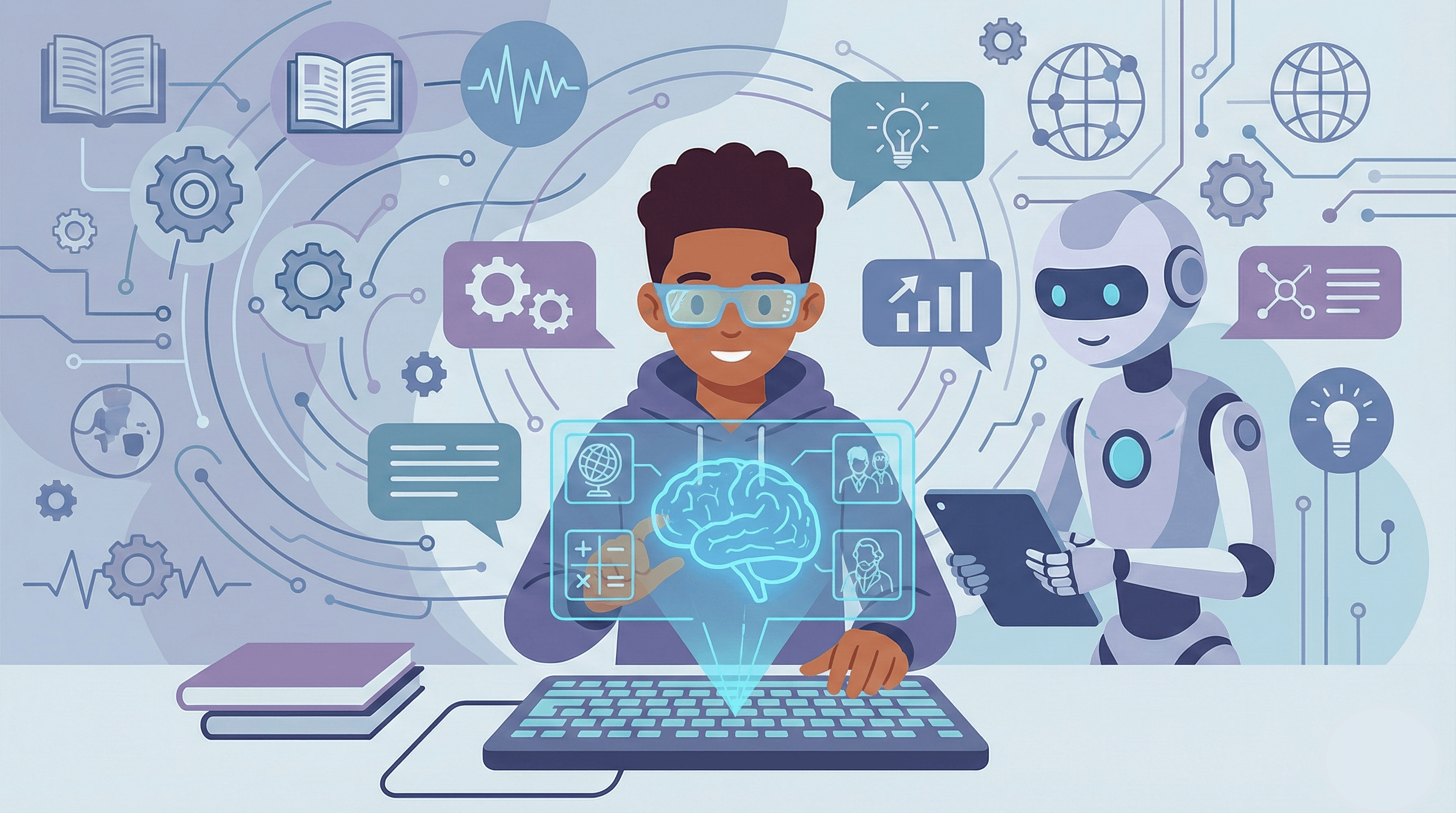
AI is transforming education, but learning doesn’t happen in a cultural vacuum. This article explores why cultural context matters in AI-powered education and how ignoring it can limit inclusion, engagement, and impact.
AI is quickly becoming part of everyday learning. From automated feedback to personalized study plans, these tools promise to make education more efficient, accessible, and tailored to individual needs. And in many ways, they already do.
But beneath the excitement, there’s a quieter issue that doesn’t get nearly enough attention: culture.
Education has always been deeply cultural. How students ask questions, how teachers give feedback, what counts as “good” participation, and even how success is defined all vary across regions and communities. Learning doesn’t happen in isolation—it’s shaped by language, social expectations, family structures, and shared values. When AI systems are introduced into classrooms without acknowledging this, they risk misunderstanding the very people they’re meant to support.
Most AI-driven education tools are built with a specific learner in mind—often unconsciously. The datasets used to train them, the examples they rely on, and the benchmarks they use to evaluate progress usually reflect the cultural context of their creators. This can show up in small ways, like examples that feel unfamiliar to students, or in bigger ways, like grading systems that favor one style of expression over another. Over time, these mismatches can affect confidence, engagement, and learning outcomes.
Consider something as simple as written feedback. In some cultures, direct criticism is expected and valued. In others, it’s softened or delivered indirectly. An AI tutor that provides blunt feedback might be motivating for some students and discouraging for others. The system isn’t wrong—it’s just culturally unaware. And when this lack of awareness is scaled across thousands or millions of learners, its impact multiplies.
There’s also the issue of language. Even when AI systems technically support multiple languages, they often struggle with local expressions, context, or cultural references. Students may be marked incorrect not because they don’t understand the material, but because they express that understanding differently. When this happens repeatedly, AI stops being a helpful guide and starts feeling like an unfair judge.
Ignoring cultural context doesn’t just limit the effectiveness of AI in education—it can reinforce existing inequalities. Students who already feel out of place in traditional education systems are often the ones most affected by rigid, one-size-fits-all technologies. Instead of leveling the playing field, poorly designed AI tools can widen the gap.
If AI is going to play a meaningful role in the future of education, it needs to move beyond personalization based solely on performance metrics. True personalization means understanding learners as people, not just data points. It means designing systems that can adapt to different cultural norms, communication styles, and learning environments.
This doesn’t require AI to “know” culture in a human sense, but it does require the people building these systems to take culture seriously. Diverse training data, input from educators across regions, and continuous feedback from students themselves are essential steps in that direction.
AI has the potential to support learning at an unprecedented scale. But scale without sensitivity comes at a cost. If we want AI-powered education to be truly inclusive and effective, culture can’t be an afterthought—it has to be part of the foundation.