Join and be a part of
revolutionary education!
Contact us to get a demo of Vidh.
Download Our Mobile
App For Parents
Available on iOS and Android.


Contact us to get a demo of Vidh.
Available on iOS and Android.
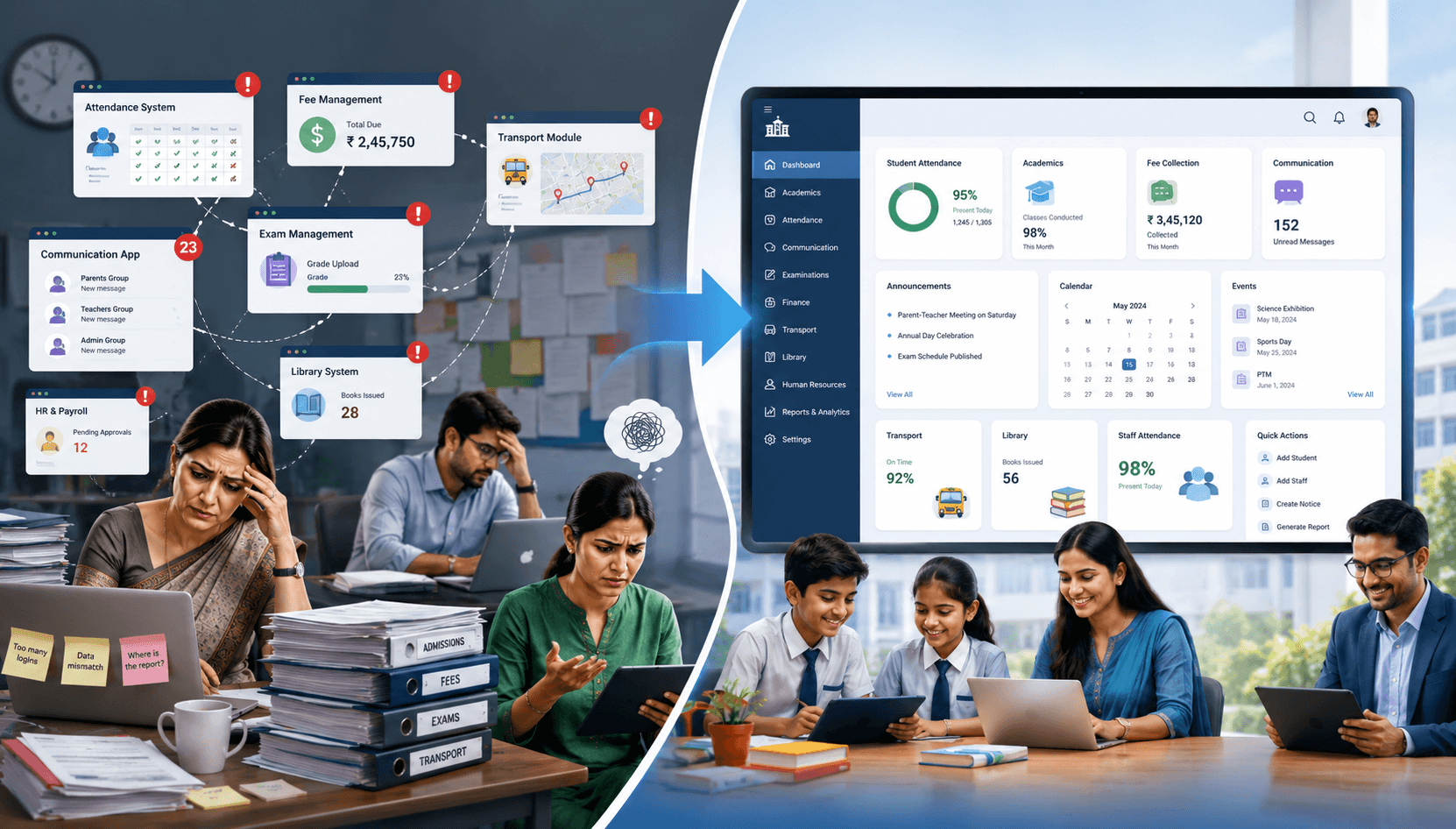
From buying tech without a strategy to ignoring data privacy — here are the most common technology mistakes schools make, and what to do instead."
There's something almost poetic about the way schools approach technology.
The intent is always right.
A principal wants students to be future-ready. An administrator wants to reduce paperwork. A teacher wants to spend less time on reports and more time actually teaching. A trustee sees competitors adopting new systems and doesn't want to be left behind.
So the school invests. Sometimes a lot.
And then — nothing changes. Or worse, things get more complicated.
I've seen this pattern repeat itself across schools of every size, every board, and every geography. The technology arrives with great promise and often exits quietly, barely used, creating more frustration than it solved.
The problem isn't that schools are getting technology wrong because they don't care. It's that the mistakes are subtle, systemic, and almost always avoidable.
Here are the biggest technology mistakes schools make — and what to do instead.
This is the most common mistake, and it starts before anything is even purchased.
A school sees a flashy demo. A vendor makes a compelling pitch. A trustee reads an article about how "AI is transforming education." And suddenly, a procurement decision is made without any clear framework for what problem is actually being solved.
The result?
Software that duplicates existing processes digitally, without improving them
Features nobody asked for and nobody uses
Budgets spent on solutions looking for problems
What to do instead:
Start with the pain points, not the product. Before any technology evaluation, schools should map out their actual operational bottlenecks — administrative overload, communication gaps, data silos, performance blind spots — and then look for solutions that directly address those specific problems.
Technology should solve a named problem, not just sound impressive.
This one is dangerous because it looks like progress.
The school moves attendance from a paper register to a tablet. Fee collection shifts from a cash counter to an online form. Exam results are uploaded to a portal instead of mailed home. Everyone celebrates the "digital transformation."
But nothing has actually changed in how the school operates, how teachers teach, or how students learn.
Digitization is moving things online. Transformation is changing how things work.
The difference matters enormously:
Digitization: Attendance is now marked on a screen instead of paper
Transformation: Attendance data is automatically analysed, and teachers are alerted when a student's absence pattern signals a risk
Digitization: Parent notices are sent via WhatsApp
Transformation: Parent communication is personalised, timely, and driven by individual student data
Schools that mistake the first for the second often stop at the surface level and miss the deeper operational intelligence that makes technology genuinely valuable.
Walk into most schools today and you'll find a sprawl of platforms:
One app for attendance
Another for fees
A third for timetables
A fourth for learning materials
A fifth for parent communication
Spreadsheets for everything else
Each system works in isolation. None of them talk to each other. Data entered in one platform doesn't flow to another. Reports have to be compiled manually because the systems don't integrate. And staff end up spending more time managing software than doing their actual jobs.
The consequence is fragmented intelligence.
A student's attendance record, academic performance, communication history, and behavioural patterns are all stored in different places — which means nobody has a complete picture of that student at any given moment.
The right approach isn't more software. It's connected intelligence — a platform where data flows freely across every function, and where each insight informs the next decision automatically.
Schools frequently invest in technology for administration and overlook the people who matter most — the teachers.
When a new platform is introduced without adequate onboarding, without dedicated training time, and without listening to teacher feedback, adoption fails. Teachers work around the technology, revert to old habits, or use it minimally — just enough to tick a compliance box.
Why this happens:
Technology is rolled out with a one-day training session and then left to itself
Teachers aren't consulted during vendor selection
The platform is designed for administrators, not educators
There's no ongoing support once implementation is complete
What to do instead:
Technology adoption is a change management exercise, not an IT project. Schools that succeed with technology treat teacher buy-in as a prerequisite, not an afterthought. The best platforms are built to make teachers' lives easier — not add another layer of complexity.
If a teacher doesn't see value in a platform within the first week, the platform has already failed.
Every few years, schools go through a technology refresh. New laptops. New projectors. New interactive whiteboards. A new computer lab.
These are visible investments. They photograph well for brochures and impress parents during open days.
But hardware without the right software and intelligence behind it is just expensive furniture.
A school with 500 tablets running outdated, disconnected software is less advanced than a school running a unified AI-powered platform on standard devices.
The real transformation in education isn't happening through equipment — it's happening through intelligence. Through platforms that understand student data, identify learning gaps, automate administrative workflows, and help teachers make better decisions every single day.
Physical infrastructure matters. But the intelligence layered on top of it matters far more.